Linear regulators fed from a bridge rectifier, protection against reversed or excess supply voltage, and an open-loop buck converter.
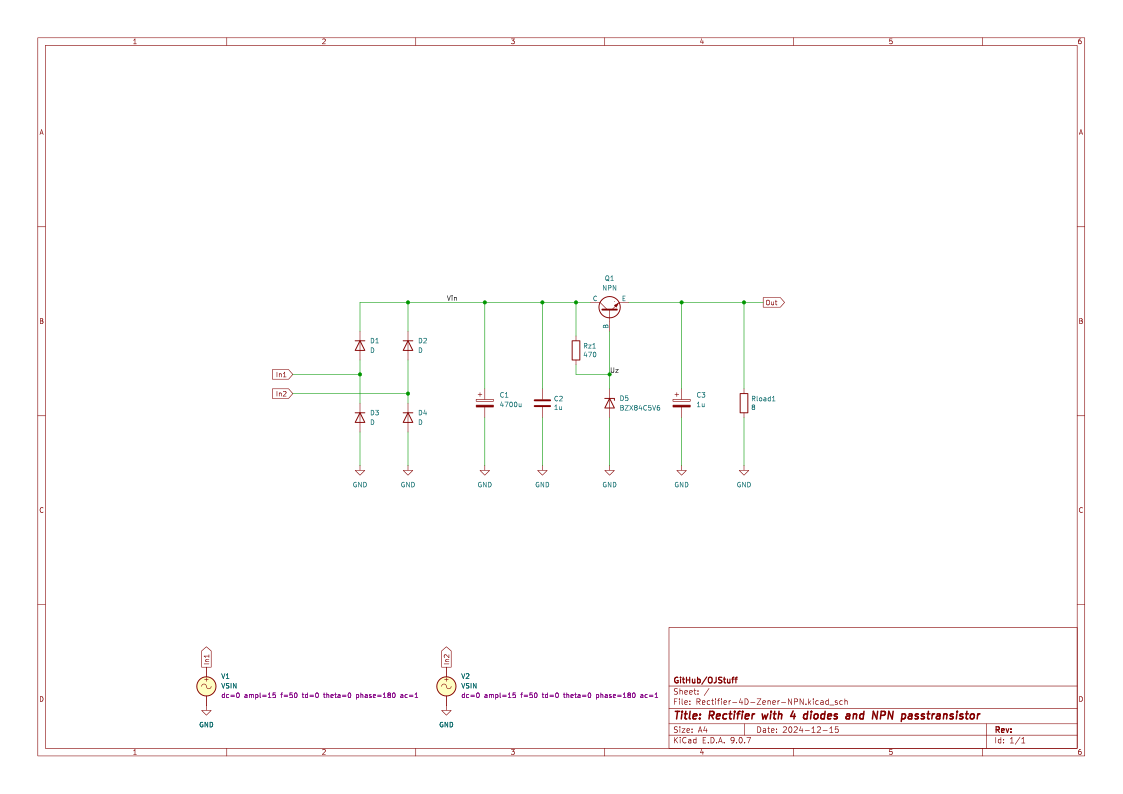
Rectifier 4D Zener NPN
The simplest regulator: a zener sets an NPN emitter follower’s base, giving about 4.7 V at 0.58 A.
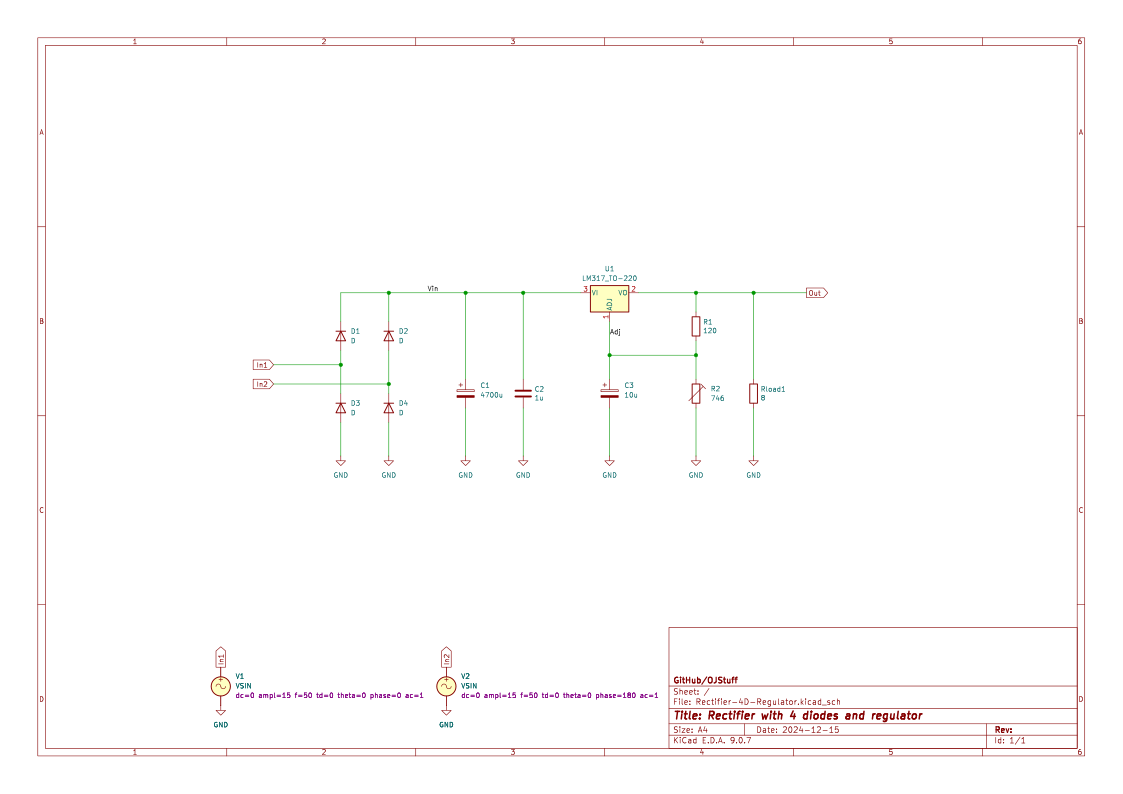
Rectifier 4D Regulator
A bridge rectifier followed by an LM317 adjustable regulator: a rippling 11–13 V turned into a steady 9 V at 1.1 A.
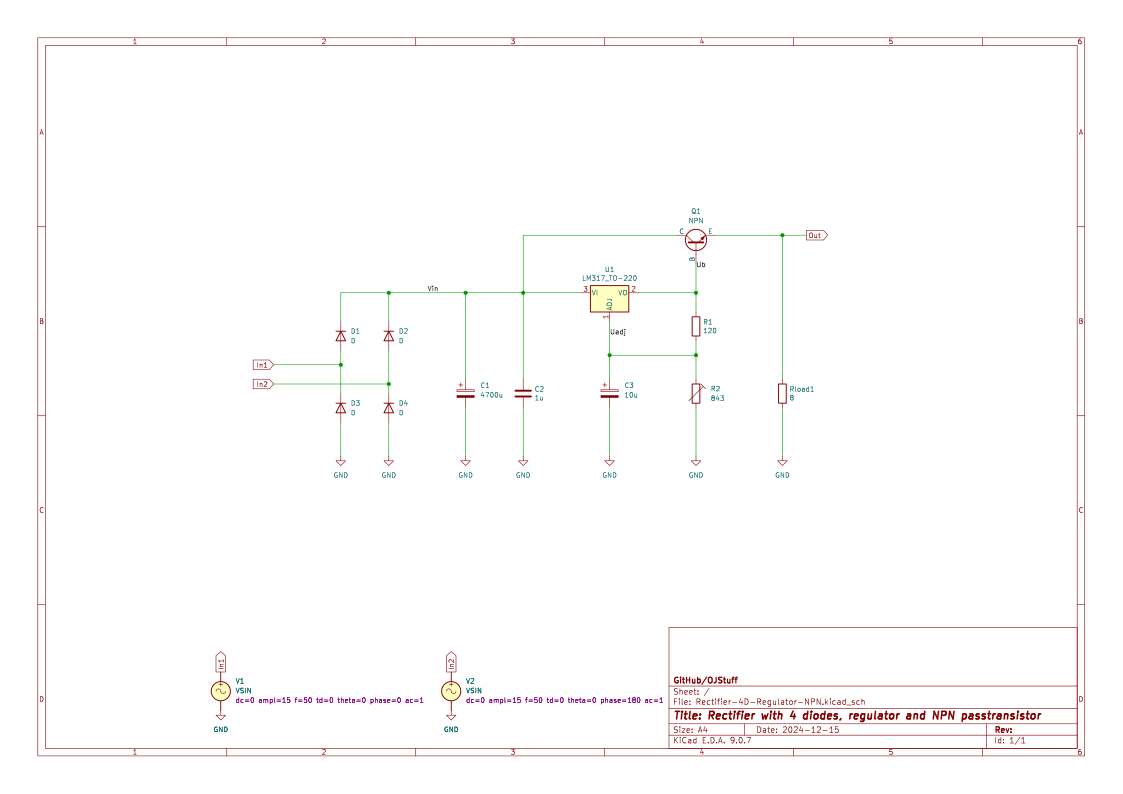
Rectifier 4D Regulator NPN
An LM317 regulates the base of an NPN emitter follower. The transistor carries the load current, but sits outside the regulation loop, so the output is one Vbe below the regulated voltage.
Rectifier 4D Regulator PNP
The classic LM317 current boost: a PNP transistor takes over most of the load current, while the LM317 still sets the output voltage.
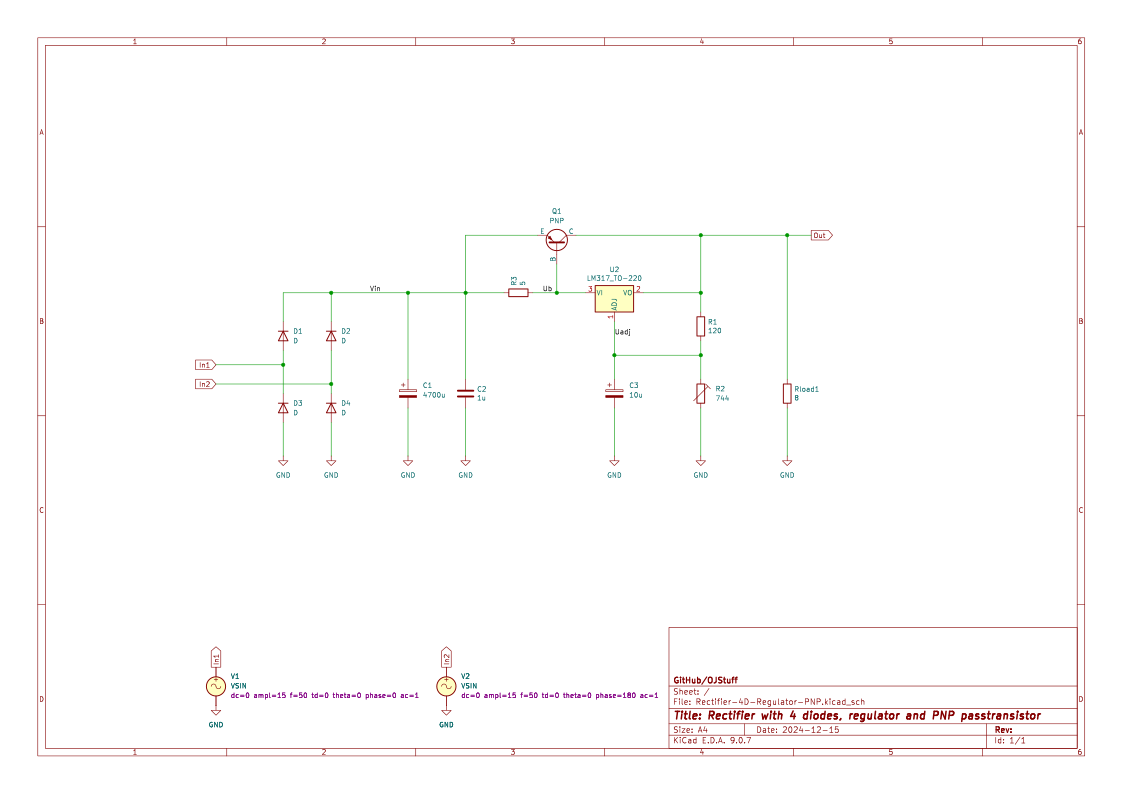
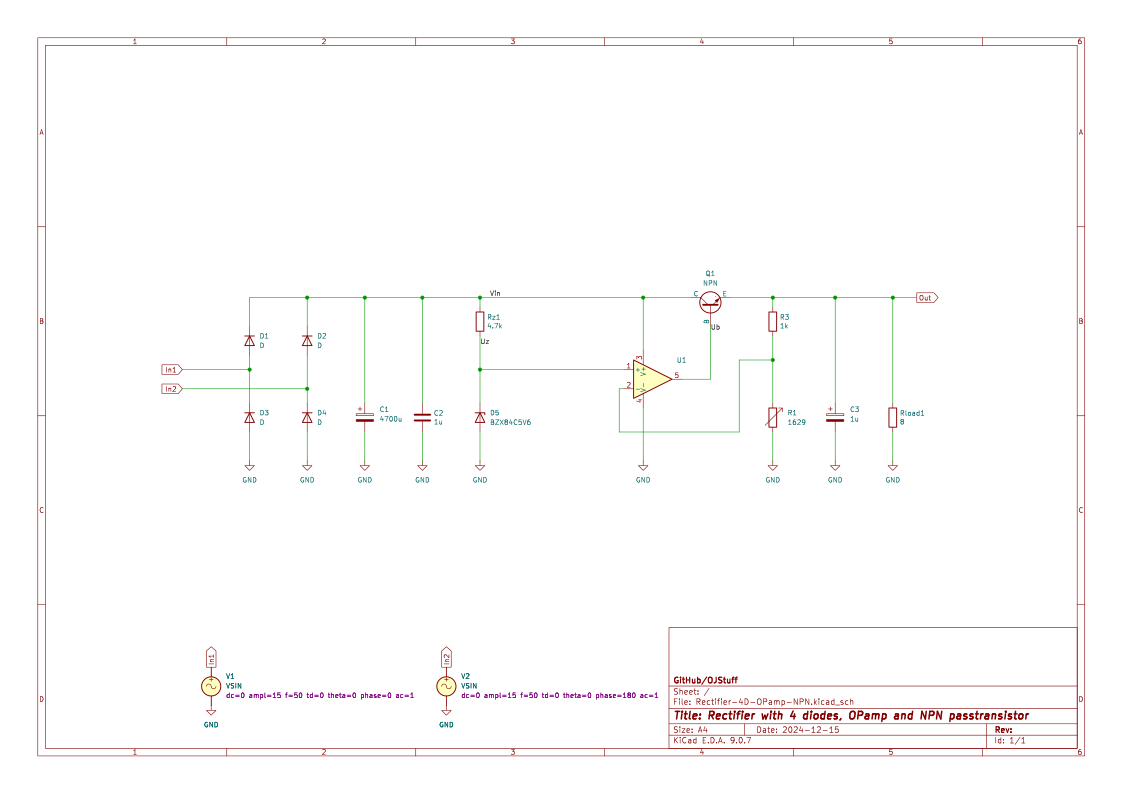
Rectifier 4D OPamp NPN
A discrete series regulator: an op-amp compares a zener reference with a divided-down output and drives an NPN pass transistor, holding 9 V.
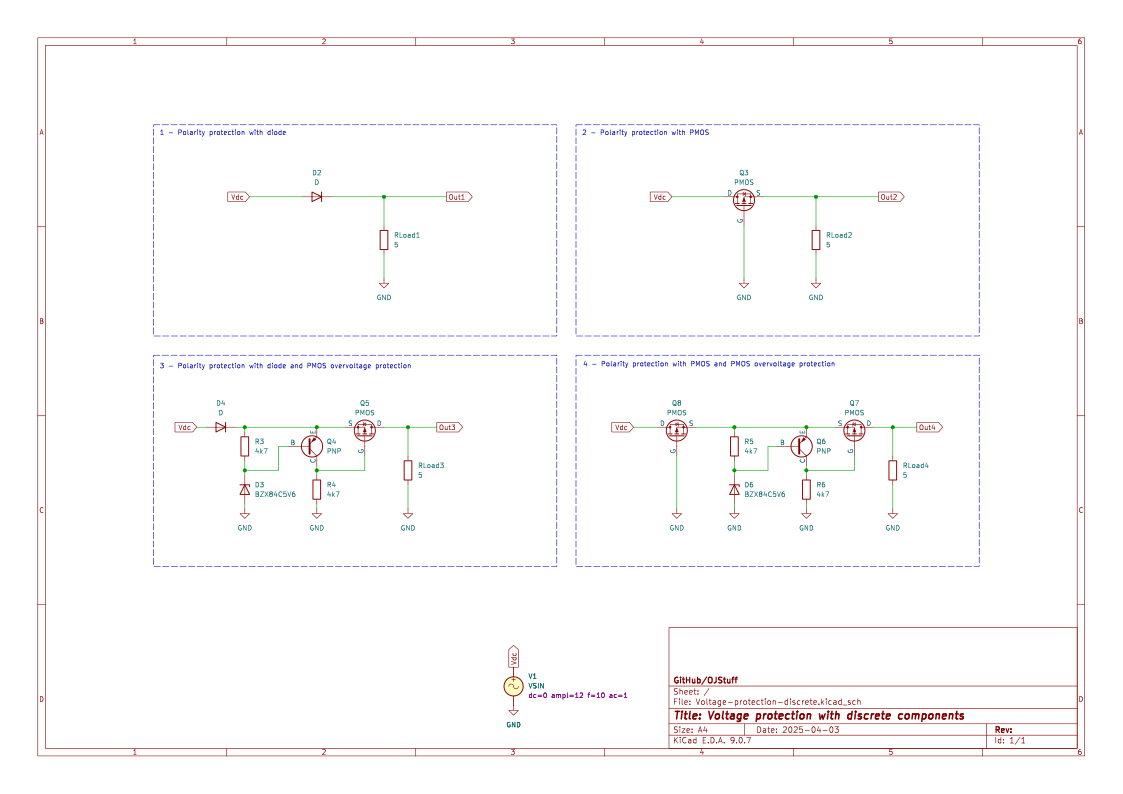
Voltage Protection Discrete
Four ways to protect a load from a supply connected backwards or set too high, built from diodes, MOSFETs and transistors.
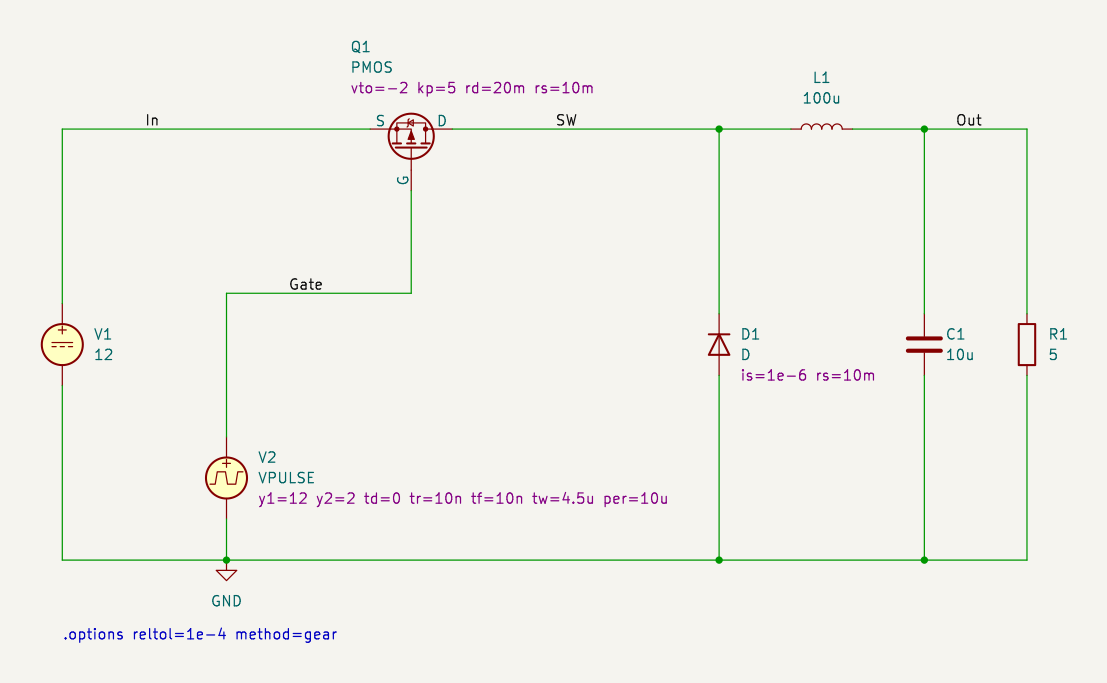
Buck Converter Open Loop
A PMOS switch, a freewheeling diode and an LC filter step 12 V down to 5.197 V at 1.04 A, with 0.31 A of inductor ripple and 38 mV of output ripple at 100 kHz.