The classic op-amp circuits, an integrator, a differentiator and an active filter, a comparator, Schmitt trigger and oscillator, and the open-loop gain and bandwidth behind them.
OPamp Voltage Follower
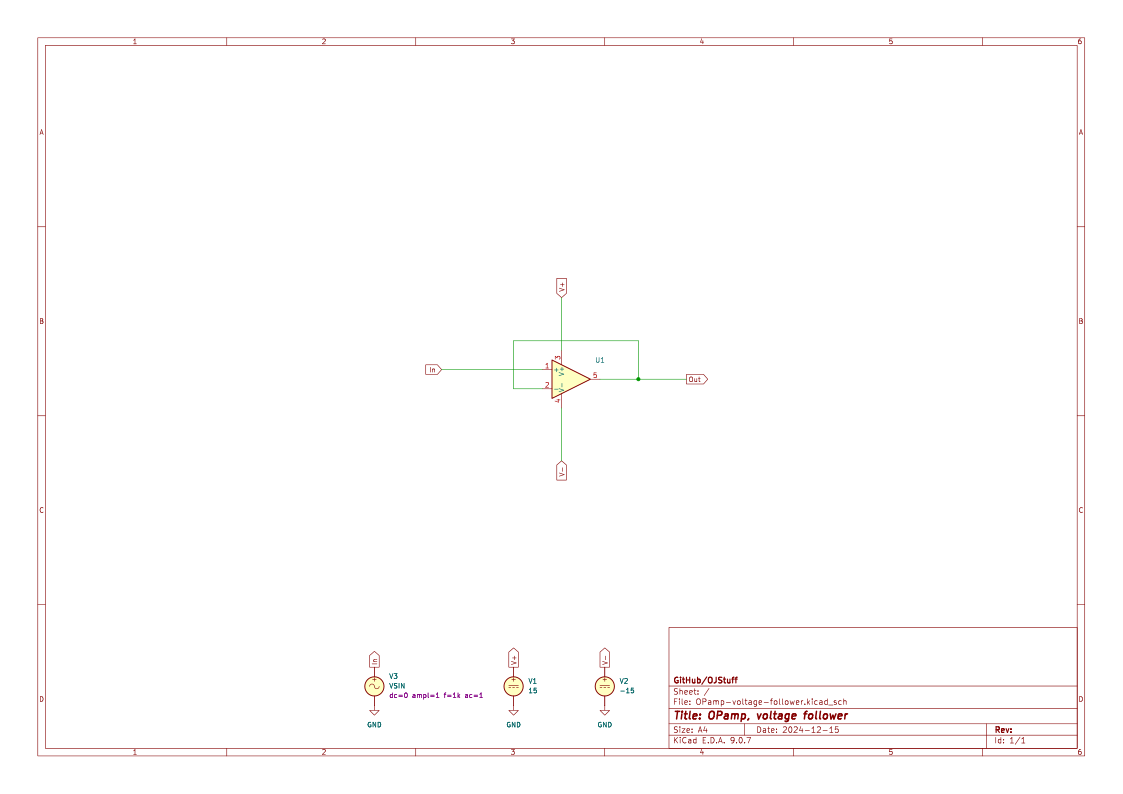
An op-amp with its output tied to its inverting input: a buffer with a gain of exactly 1.
OPamp Inverting
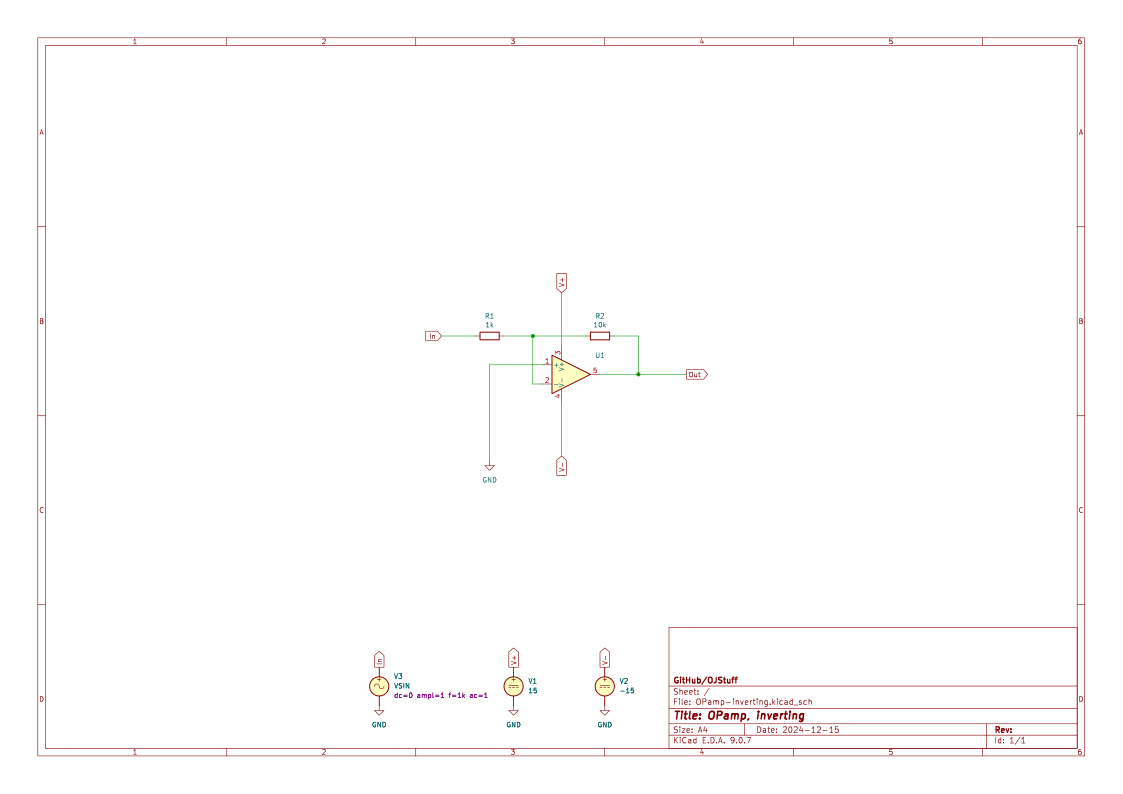
An inverting amplifier with a gain of −10, set by two resistors.
OPamp Noninverting
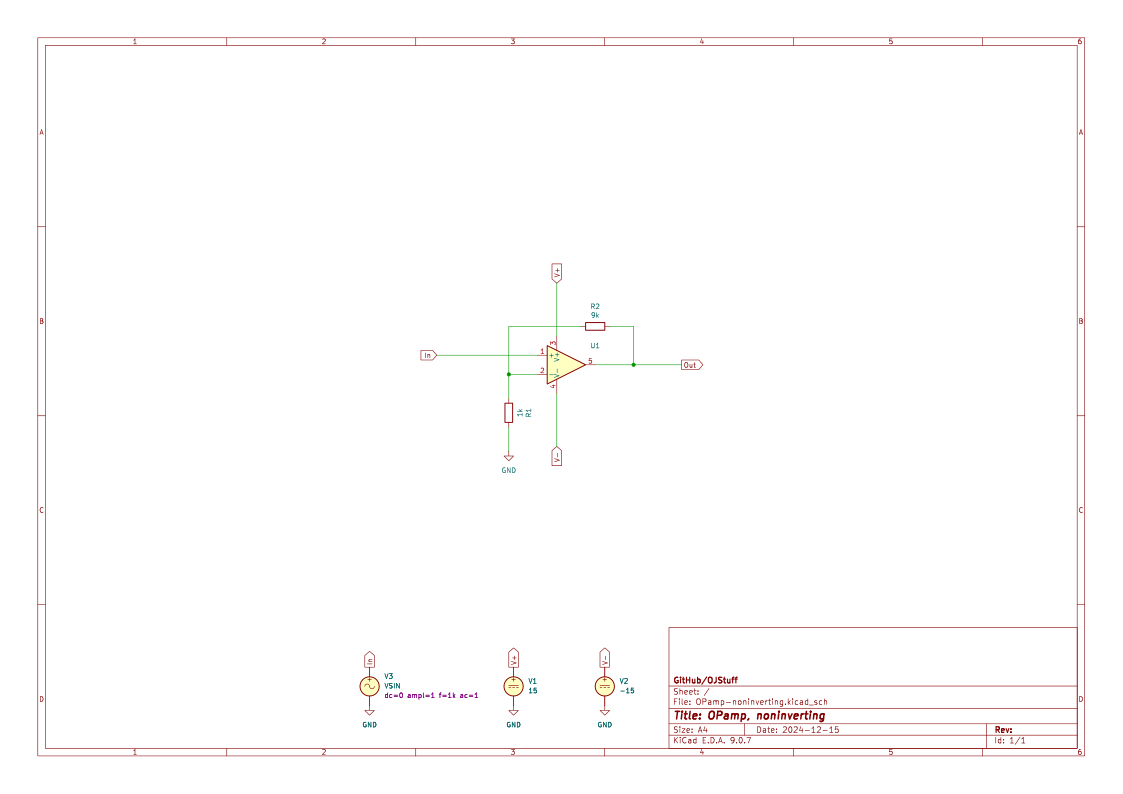
A non-inverting amplifier with a gain of 10, and the bandwidth that gain costs.
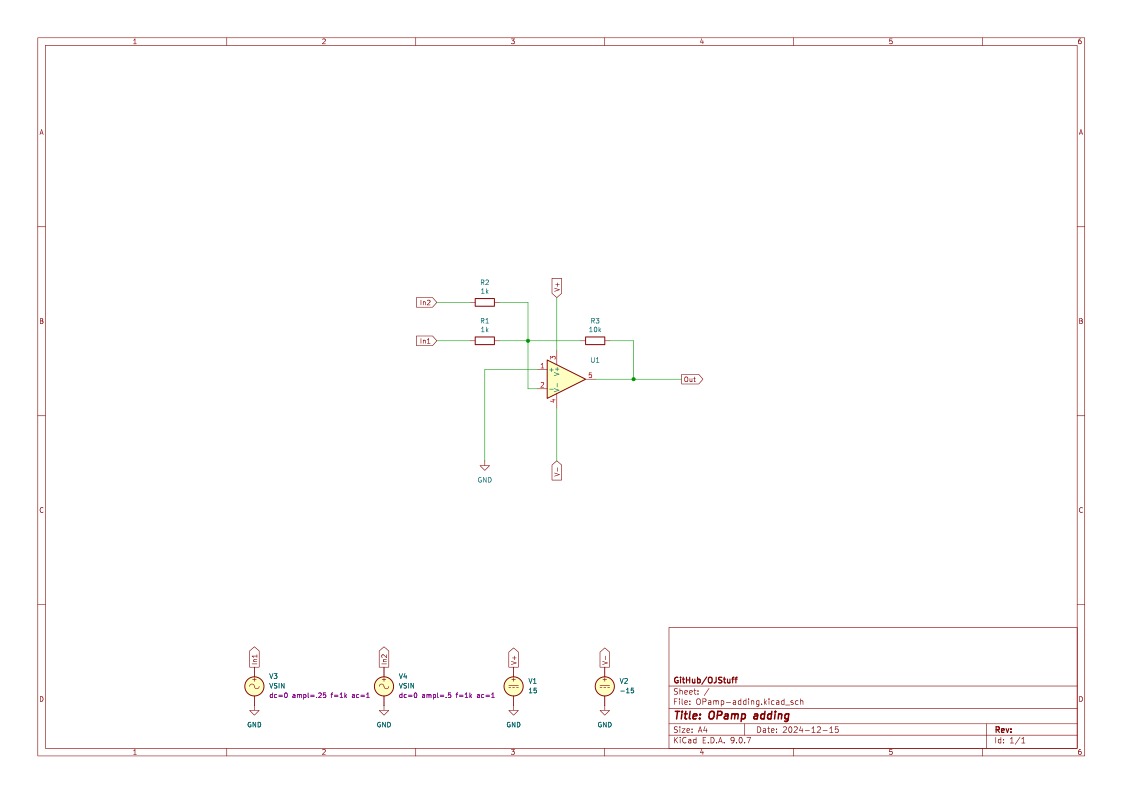
OPamp Adding
An inverting summer: the output is −10 times the sum of two inputs, and the model’s input offset shows up as a small DC shift.
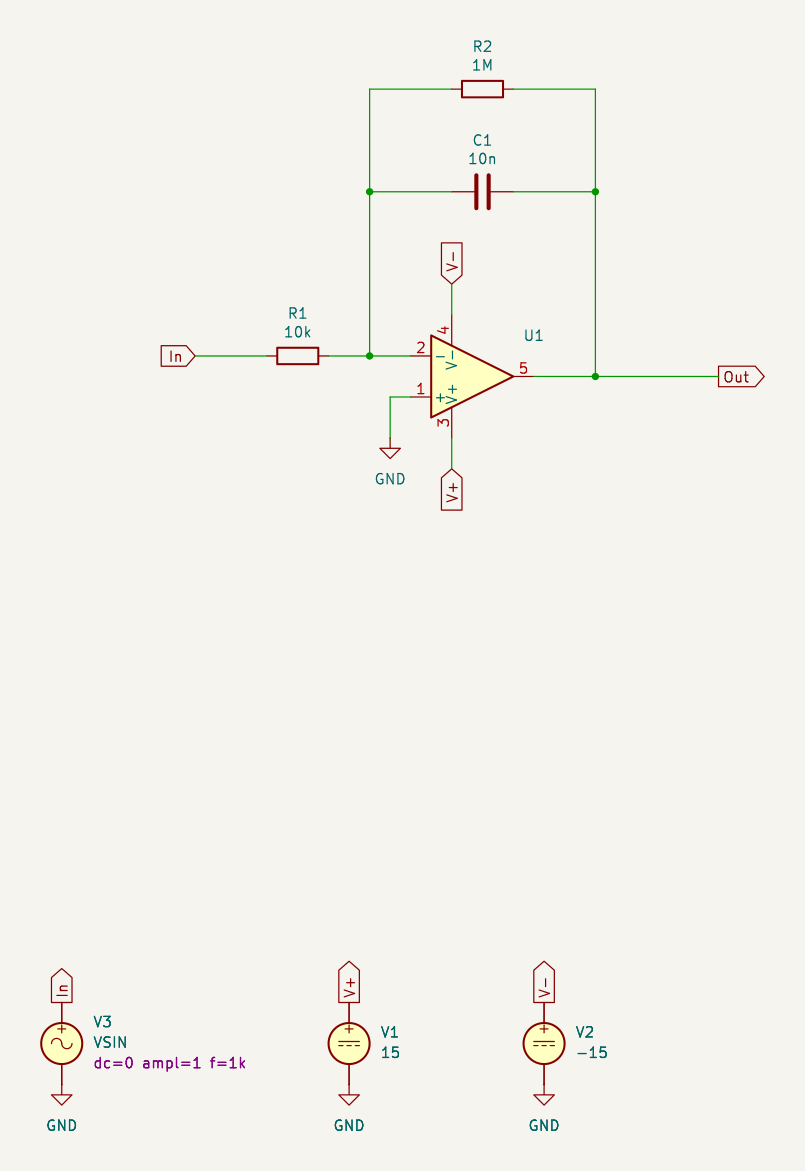
OPamp Integrator
An inverting integrator turns a 1 V, 1 kHz sine into a 3.18 V peak-to-peak output, and a 1 MΩ resistor across the capacitor holds the op-amp’s offset to −1.01 V.
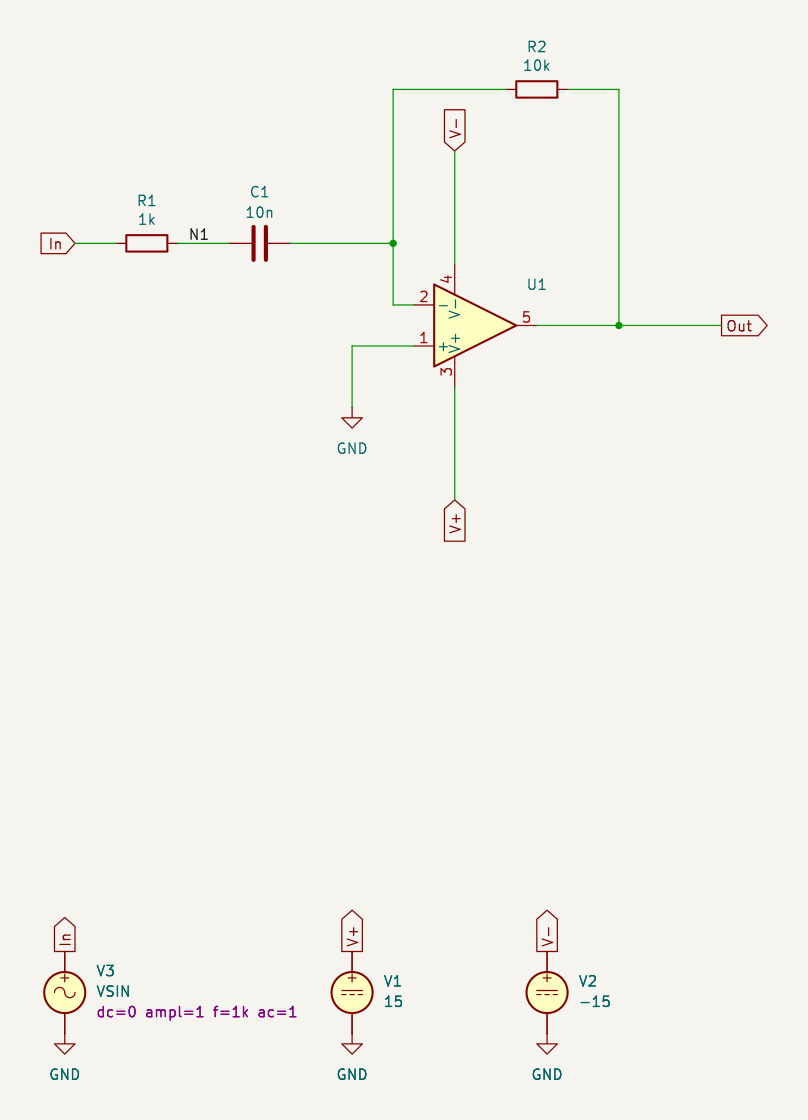
OPamp Differentiator
An inverting differentiator: the gain rises 20 dB per decade, −4.04 dB at 1 kHz, until the op-amp’s gain-bandwidth stops it in a 19.7 dB peak at 24 kHz.
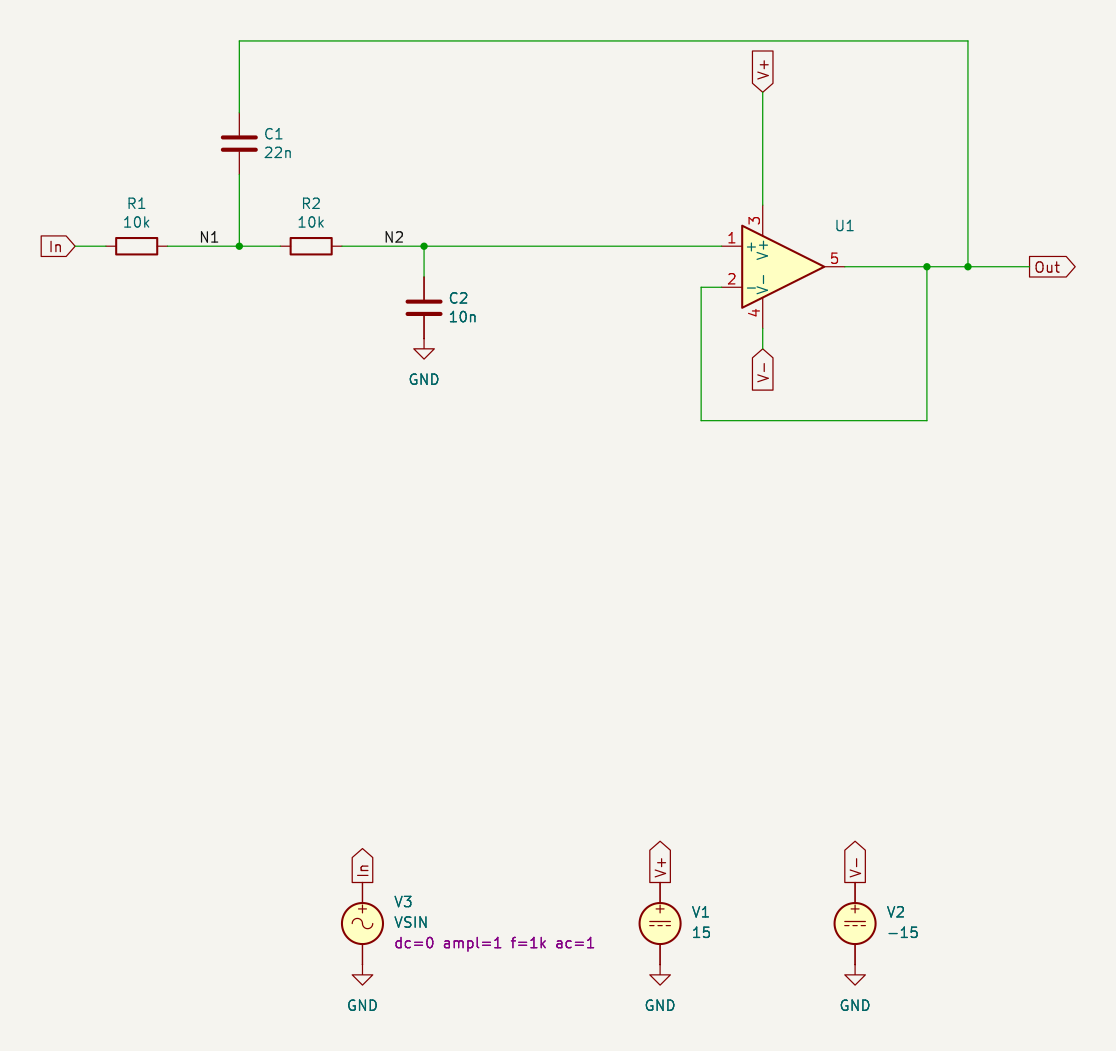
OPamp Sallen-Key Lowpass
A second-order active low-pass filter: two resistors, two capacitors and a follower put the −3 dB point at 1.12 kHz, then roll off twice as fast as an RC.
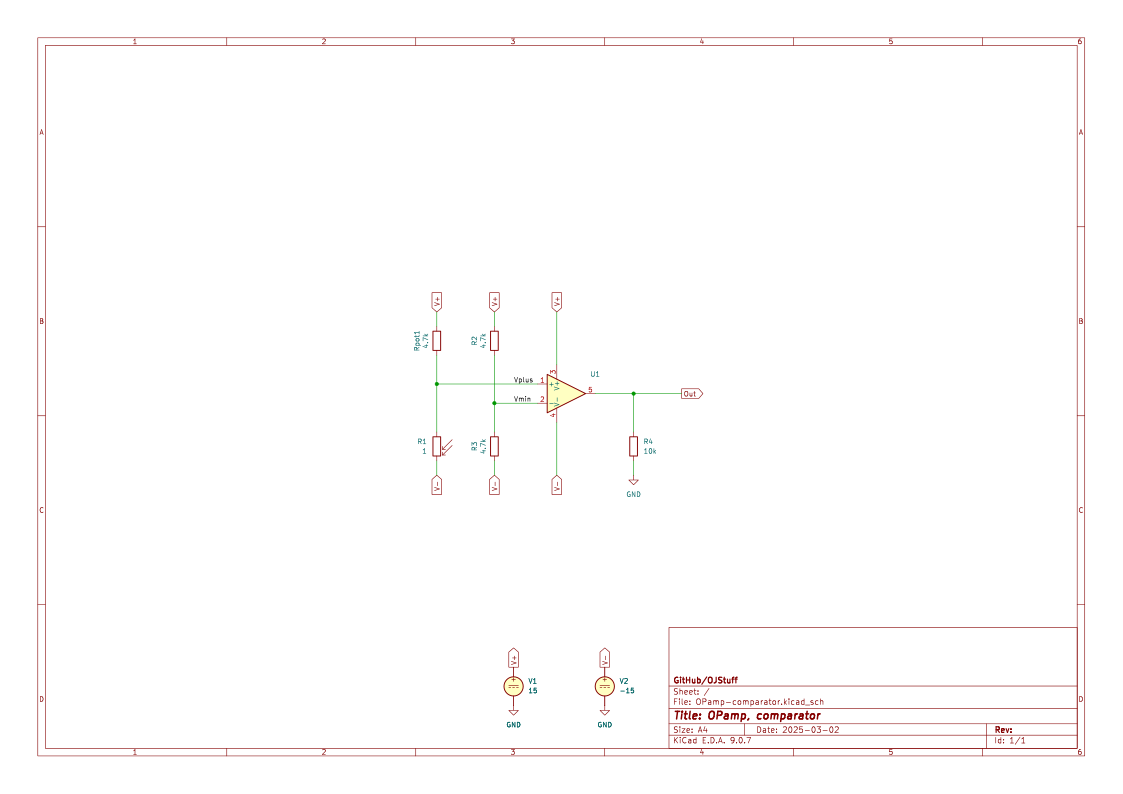
OPamp Comparator
An op-amp used without feedback as a comparator: its output snaps between the supply rails as a light-dependent divider crosses a 0 V threshold.
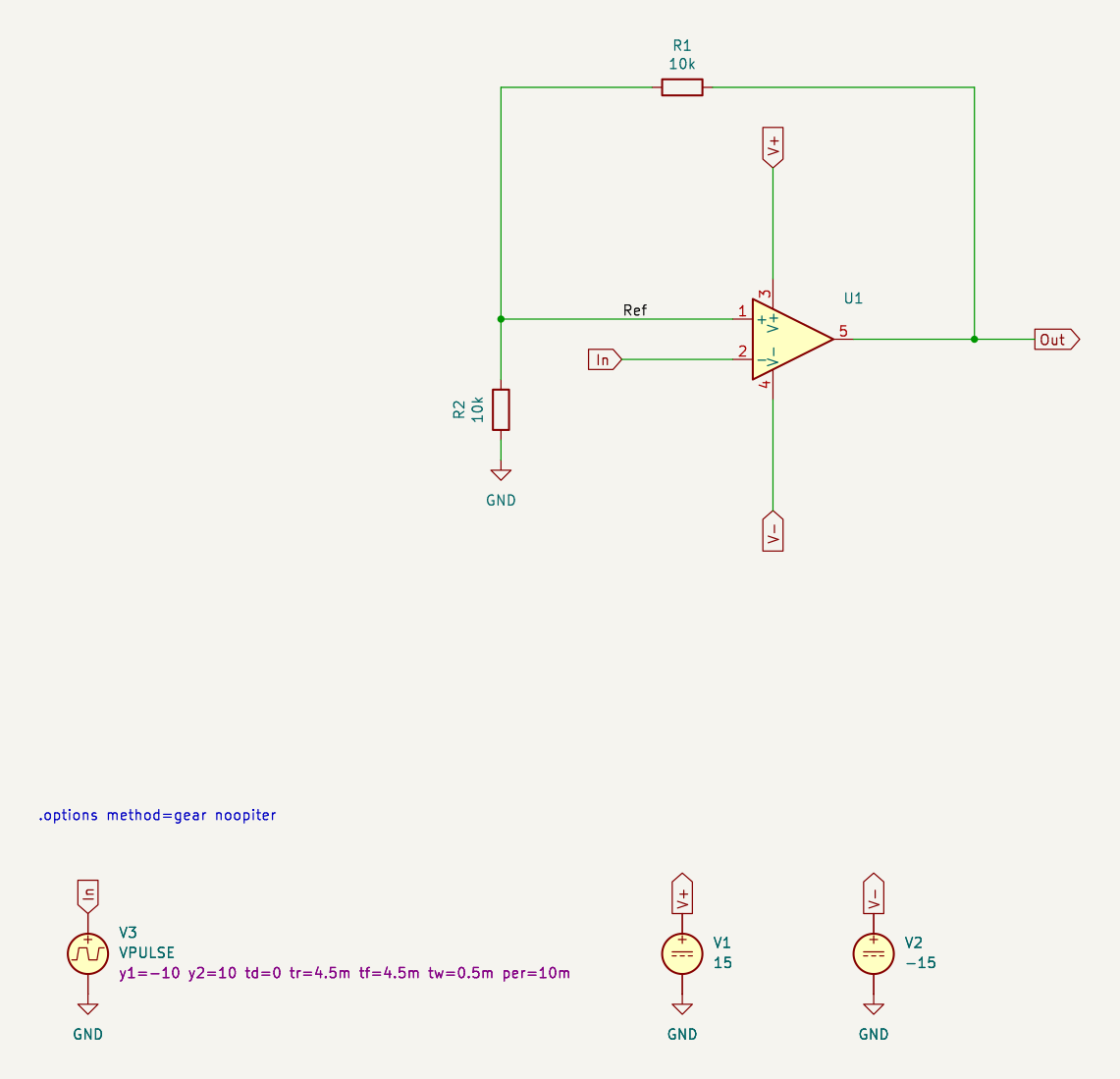
OPamp Schmitt Trigger
A comparator with positive feedback: the output switches low when the input rises past +7.5 V, and back high only when it falls past −7.5 V.
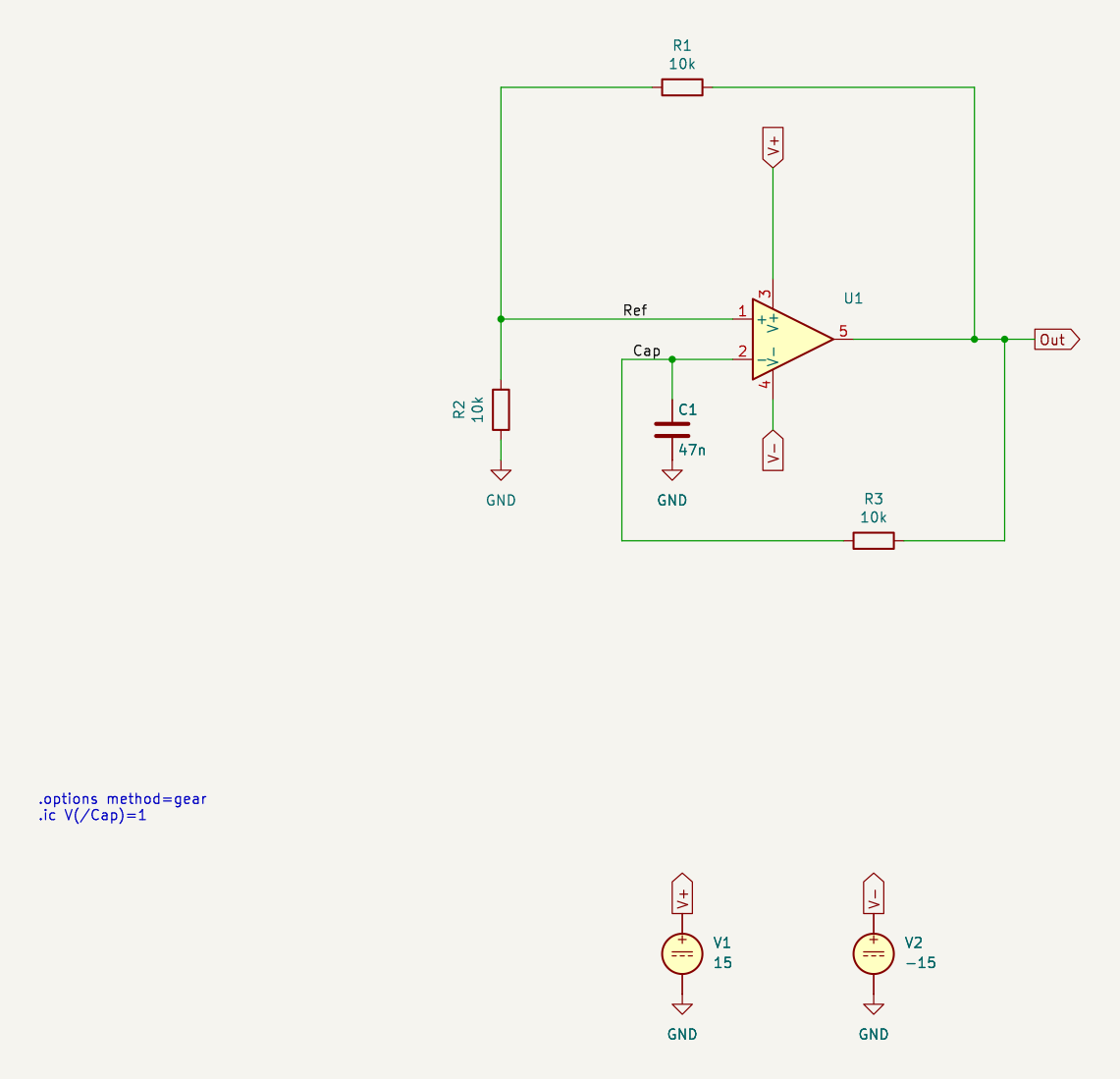
OPamp Relaxation Oscillator
A Schmitt trigger that charges its own input through an RC: the output is a square wave with a period of 2 · R · C · ln 3, 968 Hz for 10 kΩ and 47 nF, and the simulation gives 956.3 Hz.
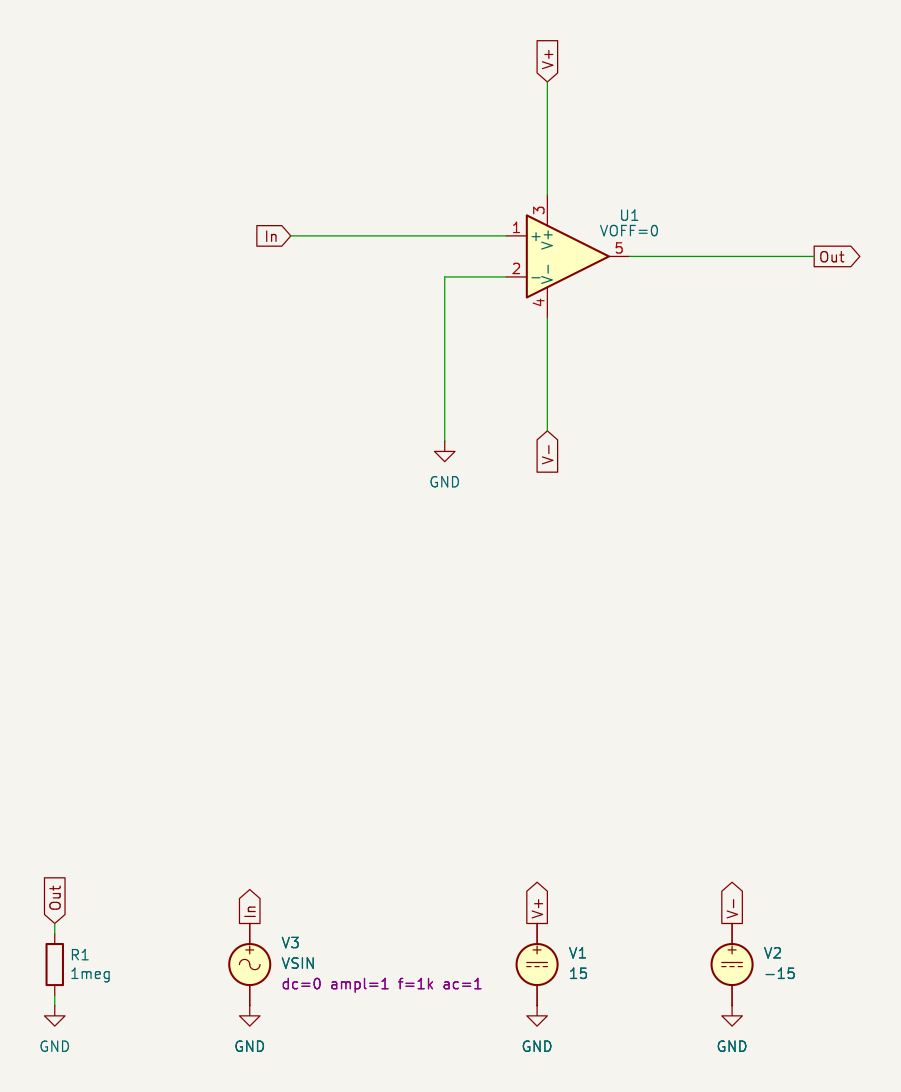
OPamp Open Loop
The op-amp model with no feedback, showing its own frequency response: 86 dB of gain, a pole at 20 Hz, and unity gain at 400 kHz.
OPamp Headphone
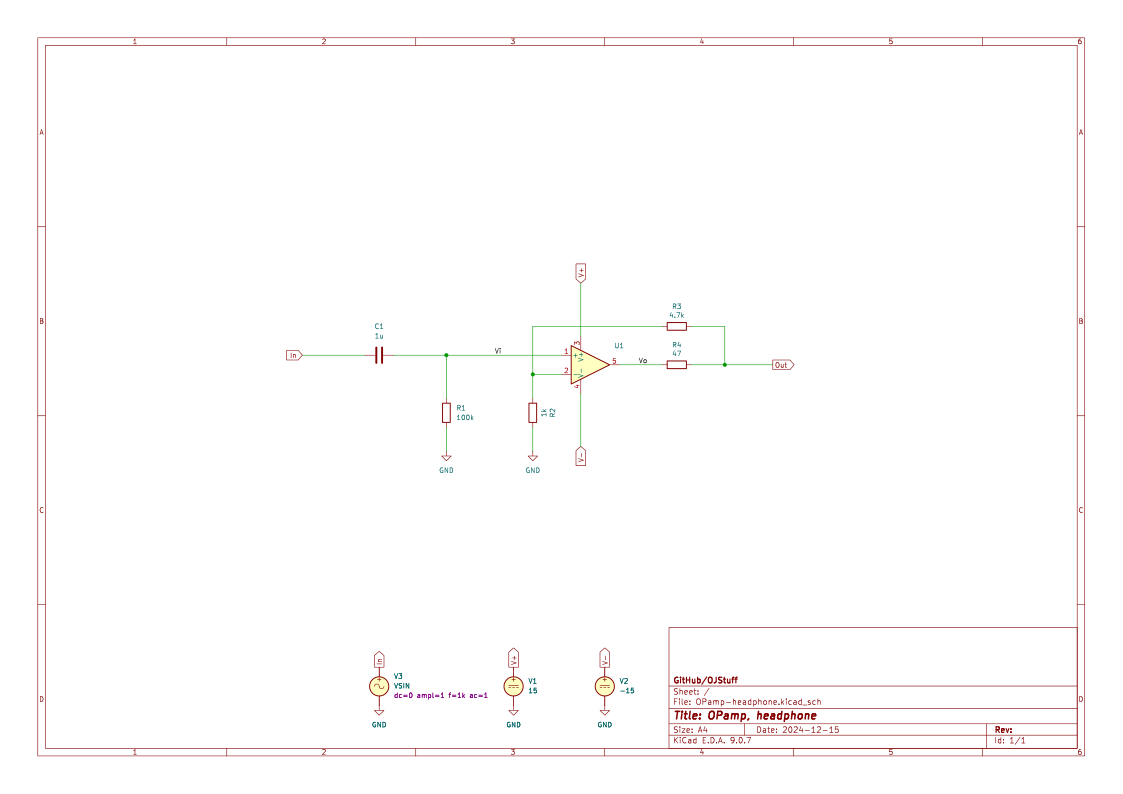
A non-inverting stage with a gain of 5.7, AC-coupled at the input, with its feedback taken after a 47 Ω output resistor.