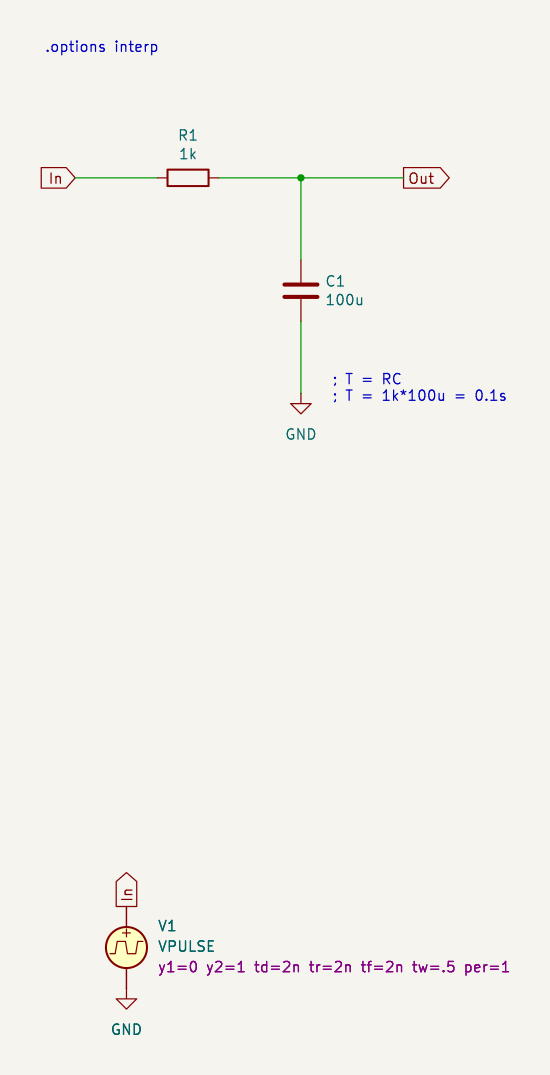
Analyses beyond the basics: a DC sweep of the circuit’s temperature, the thermal noise of an RC filter, the poles of an active filter, an amplifier’s DC gain and impedances, measurements on a result, importing a vendor’s SPICE model, and rerunning a circuit for each value of a part with a tuner’s Multi Run.
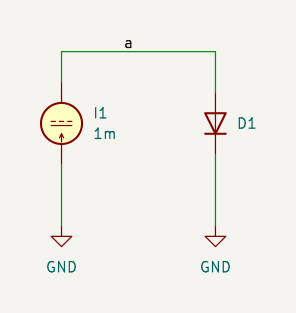
Simulation Temperature Sweep
A DC sweep can step the circuit’s temperature instead of a source: a diode carrying 1 mA drops 0.6587 V at 25 °C and 0.5509 V at 85 °C, −1.80 mV/K.
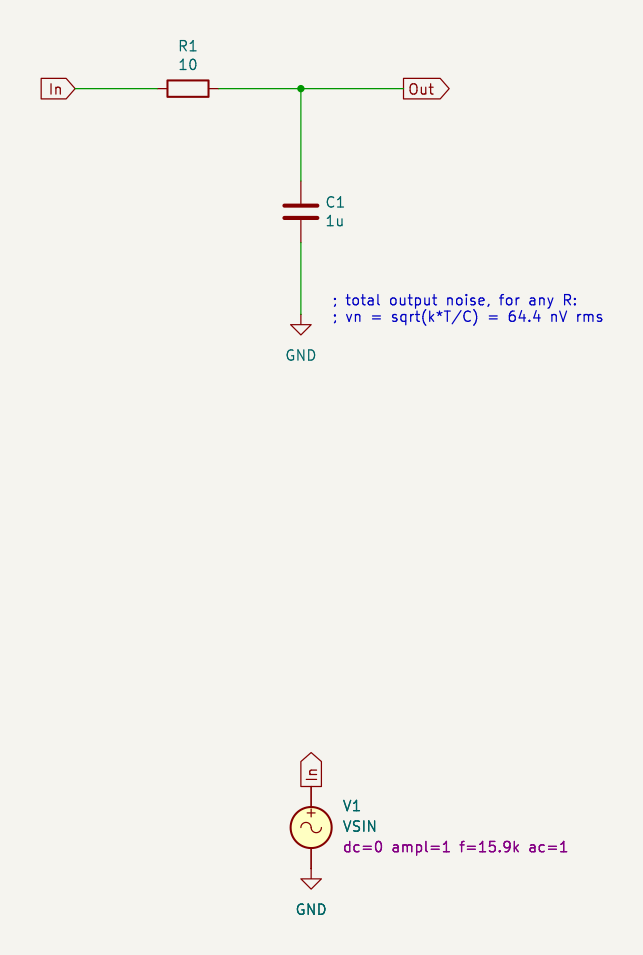
Simulation Noise RC
A noise analysis finds the thermal noise a circuit makes: at the output of an RC low-pass it totals √(kT/C) = 64.4 nV rms, whatever the resistor.
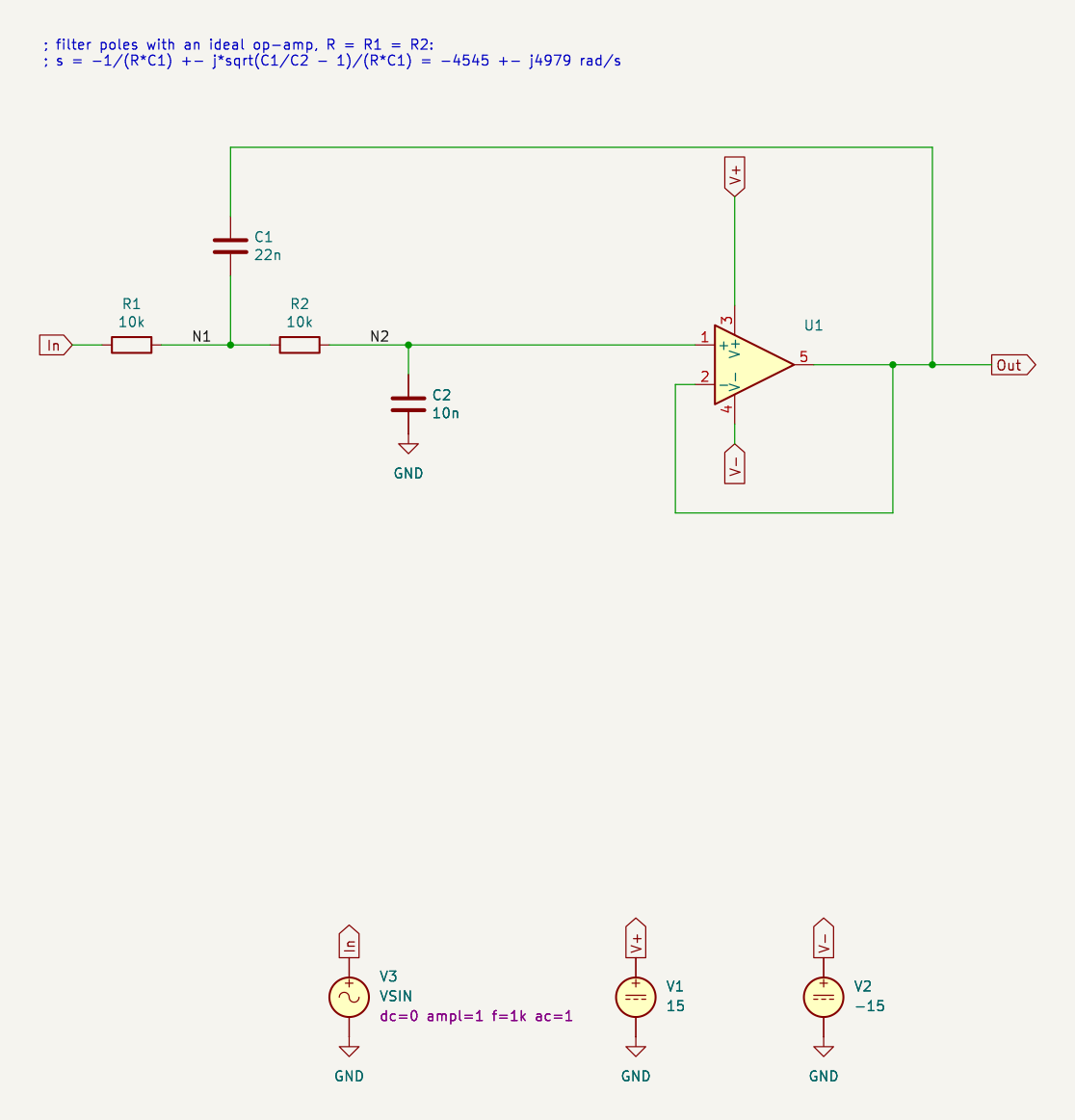
Simulation Pole-Zero
A pole-zero analysis finds the poles of a circuit’s transfer function: the Sallen-Key low-pass has a complex pair at −4528 ± j4977 rad/s.
Simulation Transfer Function
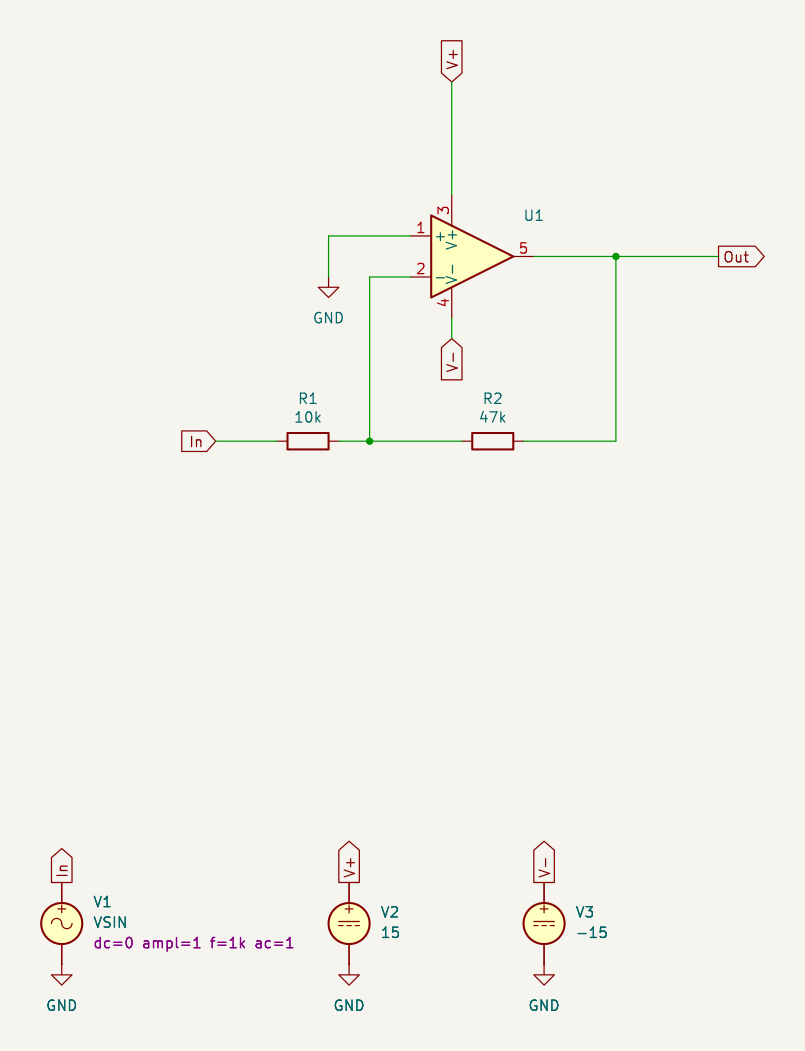
A transfer-function analysis (.tf) finds a circuit’s DC gain, input impedance and output impedance in one run: for an inverting amplifier of gain −4.7, it gives −4.69866, 10,002.35 Ω and 2.85 mΩ.
Simulation Measurements
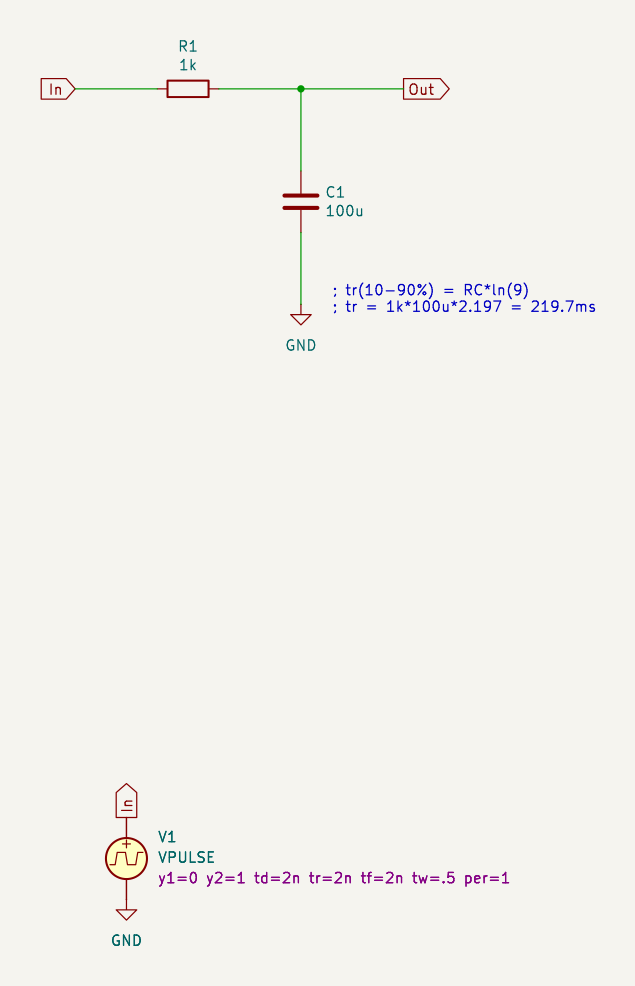
KiCad’s Measurements pane turns a plot into a number on every run: here the 10–90 % rise time of an RC charge, RC·ln 9 = 219.7 ms.
Simulation Vendor Model
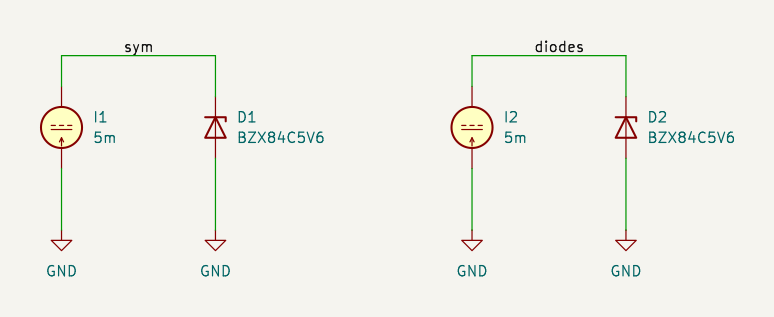
Two vendors’ SPICE models of the same BZX84C5V6 zener, wired in from their own files: at 5 mA one gives 5.600 V and the other 5.594 V.
Simulation Multi Run
A tuner in Multi Run mode reruns the simulation once per value of a part: stepping R1 of the RC Charge circuit from 1 kΩ to 4 kΩ moves the 63 % point from 0.1 s to 0.4 s, t63 = R1 · C1.